


Ask most vape brands why their nic salts feel smooth, and you will get a one-word answer: benzoic acid. Ask a few more, and one or two will now say salicylic acid instead.
Both answers are incomplete. The acid matters, and this guide explains exactly why it matters. But the acid is only one of four things that decide whether a 20mg nic salt feels comfortable or catches the back of your throat. Get any one of them wrong, and the other three cannot rescue it.
So this guide does what the usual explainers skip. It walks through all four variables, shows you what goes wrong with each, and then gives you a simple way to judge any nic salt for yourself.
The short answer
Smoothness comes down to four things. The acid used to form the salt, the purity of the nicotine, the VG/PG ratio of the base, and the consistency of the manufacturing. The acid gets nearly all the attention. Meanwhile, the other three decide whether the acid ever gets a chance to do its job.
Variable one: the acid
Nic salts start with freebase nicotine, which is alkaline and harsh to inhale at high strengths. Adding a weak organic acid lowers the pH and forms a salt. That salt absorbs faster and irritates far less.
Benzoic acid became the default because it got there first. Pax Labs used it in the formulation that made high-strength nic salts viable, and most of the industry followed. It works well, and it delivers a firm throat hit that some vapers actively prefer.
Salicylic acid takes a gentler route to the same destination. It lowers the pH effectively, yet it produces a softer inhale at the same nicotine strength. For anyone who finds 20mg uncomfortable, that difference is the whole point.

Isn’t salicylic acid just a type of benzoic acid?
This question comes up often, and it deserves a straight answer rather than a dodge. Structurally, the two are close relatives. Chemists call salicylic acid 2-hydroxybenzoic acid, because it is essentially a benzoic acid molecule carrying an extra hydroxyl group.
That extra group is not cosmetic, though. It makes salicylic acid a measurably stronger acid, and it changes how the resulting salt behaves in solution. So the distinction is real chemistry rather than marketing language. Even so, we would rather be honest about the limits of the evidence: the measurable differences are well established, while the sensory research on throat feel is still developing.
Variable two: nicotine purity
Here is the variable almost nobody discusses, and it may be the most important one.
Nicotine oxidises when it meets air and light. As it does, it develops impurities, and those impurities carry a distinctly peppery bite. Many vapers mistake that bite for strength. In reality, it is a sign of nicotine that has degraded, or that was never especially clean to begin with.
Pharmaceutical-grade nicotine starts purer and stays purer, provided it is handled properly. Consequently, a pharmaceutical-grade liquid at 20mg can feel gentler than a cheaper liquid at 10mg. The strength on the label tells you very little on its own.
Variable three: the base
Every nic salt sits in a blend of vegetable glycerine and propylene glycol. PG carries flavour and contributes throat sensation. VG is thicker and softer on the throat, but it also wicks more slowly.
A 50/50 split is the standard for nic salts, and for good reason. Push the PG higher and the liquid bites. Push the VG higher and a low-powered pod kit struggles to wick it, which produces dry hits that feel harsh for an entirely different reason. Balance matters more than either extreme.

Variable four: manufacturing consistency
The first three variables describe a recipe. This one describes whether the recipe survives contact with reality.
Airborne particulates, temperature swings, and inconsistent mixing all shift the finished liquid. A brand can nail a formula in a sample batch and then miss it in production. That is why cleanroom classification and process accreditation matter far more than they sound like they should.
You have probably felt this without naming it. Same brand, same flavour, different bottle, noticeably different experience. That is a consistency failure, and no recipe can compensate for it.
The four variables at a glance
Once you know what to look for, diagnosing a harsh nic salt becomes straightforward. Each variable fails in its own recognisable way.
| Variable | What it controls | How it fails | What to look for |
| The acid | How gently the nicotine is delivered at a given strength | A sharp, immediate catch on the inhale | Salicylate rather than benzoate, stated openly on the brand’s own site |
| Nicotine purity | Whether the liquid tastes clean or peppery | A peppery note on the exhale, and a darkening colour | Pharmaceutical grade, and pale straw colour in daylight |
| Base ratio | Flavour carry against throat comfort and wicking | Either a PG bite or dry hits from poor wicking | 50/50 VG/PG for low-powered pod kits |
| Manufacturing | Whether every bottle matches the last one | The same flavour feels different between batches | ISO:9001 process accreditation and ISO 7 cleanrooms |
Why the acid alone is not enough
Here is the part that matters most, and it is worth stating plainly.
Any manufacturer can buy salicylate nicotine from an ingredients supplier. That is a purchasing decision, and it takes an afternoon. Controlling nicotine purity, holding the base ratio, and reproducing the result across every batch takes a facility, an accreditation, and a documented process.
So the acid is necessary, but it is nowhere near sufficient. Smoothness is manufactured rather than purchased. When you see a brand name its acid and stop there, it has answered a quarter of the question.

How Pod Salt approaches all four
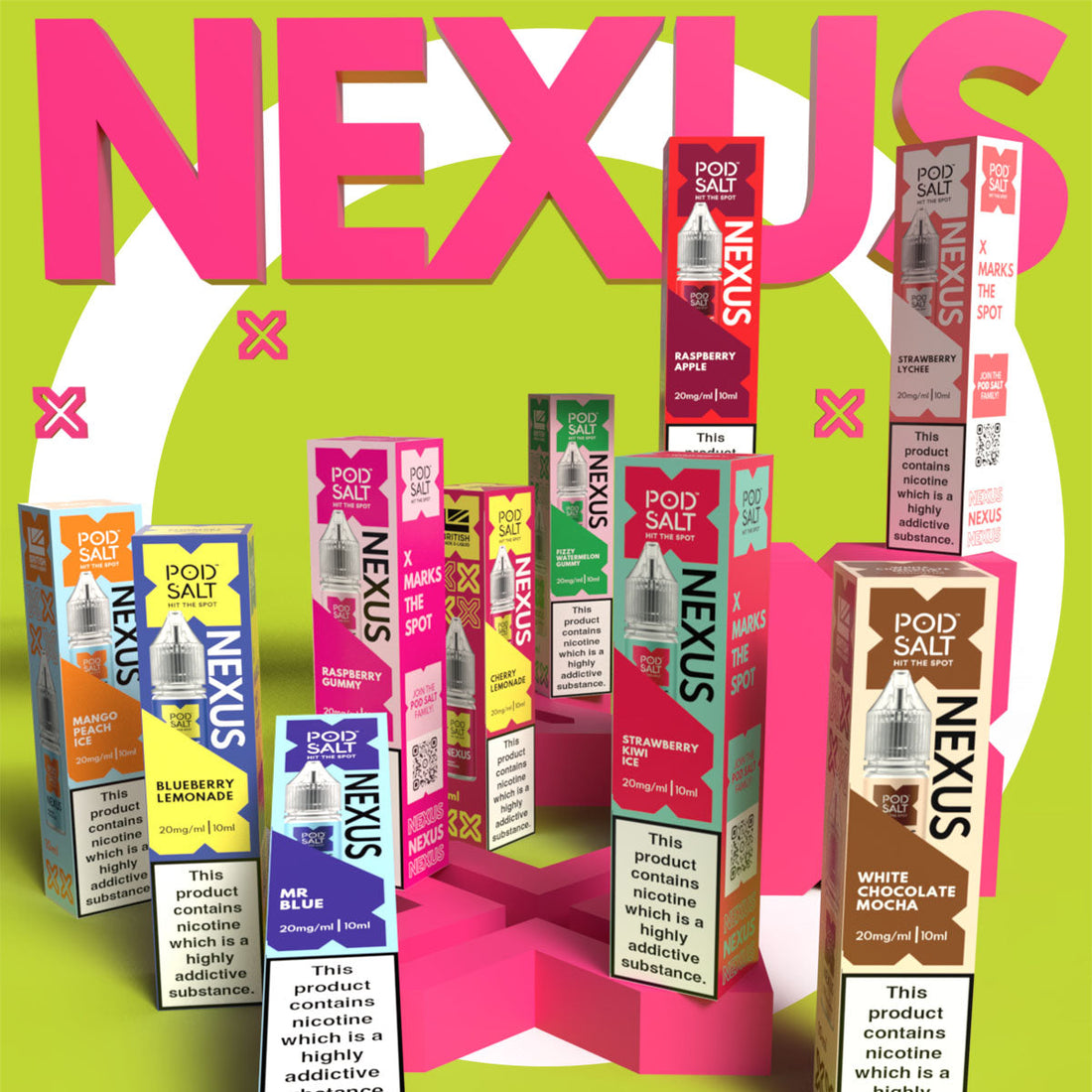
Pod Salt was built around nic salt technology from the start, rather than adapted from an existing freebase recipe. That shaped every one of these four decisions.
The formula uses salicylic acid, which was a deliberate choice made for smoothness rather than cost. The nicotine, PG and VG are all pharmaceutical grade. The nic salt range runs at a 50/50 ratio, which suits the low-powered pod kits these liquids are designed for. And production happens in ISO:9001 accredited facilities with ISO 7 cleanrooms, at Xyfil Ltd in Preston, Lancashire.
That last detail is the one competitors find hardest to match, because it cannot be bought in as an ingredient. It has to be built.
How to judge a nic salt for yourself
You do not need a lab to test any of this. Five practical checks will tell you most of what you need to know.
- Start at 20mg rather than 10mg. The UK legal maximum exposes formulation flaws that lower strengths hide.
- Look at the colour in daylight. Pale straw is normal. Deep amber or brown suggests the nicotine has oxidised.
- Give it a full pod rather than a couple of puffs. Harshness tends to accumulate over a session rather than announce itself immediately.
- Pay attention to the exhale, not just the inhale. A peppery note on the way out usually points to nicotine quality rather than the acid.
- Buy the same flavour twice, a few weeks apart. If the two bottles differ noticeably, you have found a consistency problem.

