


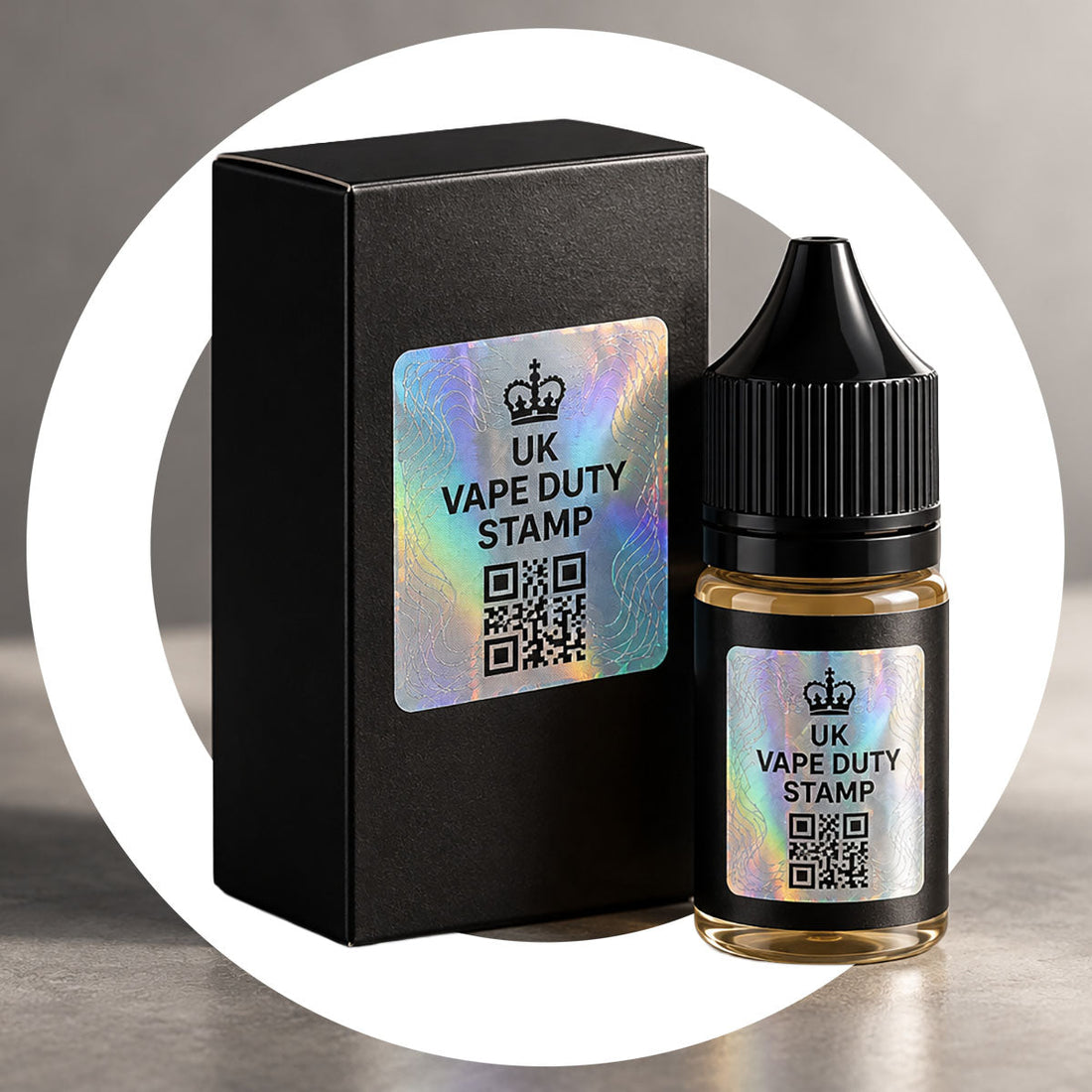
From October 1st 2026, you'll start noticing something new on vaping packaging. A small rectangular stamp, tucked onto the box or the bottle itself. That's a vaping duty stamp. It arrives alongside the new Vaping Products Duty (VPD).
Here's what it is, what it looks like, and what it means for you. Beyond the price change everyone's already talking about.
For the full breakdown of the duty itself, rates, dates, cost by format, see our complete guide to the 2026 UK vape tax. This piece focuses on the stamp: what it proves, and how it helps you buy with confidence.
What is a vape duty stamp?
A vaping duty stamp is a secure label. It shows the duty on a product has genuinely been paid. HMRC introduces it alongside VPD for one reason: make legitimate, tax-paid stock easy to identify, and illicit stock easy to spot.
Every vaping product made or imported into the UK from the 1st of October 2026 needs one. That includes a 10ml nic salt bottle, a prefilled pod, or a shortfill.
What does a vape duty stamp actually look like?
HMRC has published the technical spec, so this isn't guesswork:
- Shape and size: rectangular, 18mm wide by 42mm long.
- Material: bespoke secure paper with built-in security features. Similar in principle to the stamps already used on alcohol and tobacco.
- Format: either a pre-gummed “wet” stamp, or an ungummed “dry” stamp that manufacturers apply themselves.
- Placement: fixed to the outer retail packaging so it damages the packaging or the stamp if someone tries to remove it. On a bottle with no separate box, the stamp goes straight onto the container.
In September 2026, HMRC published the first visual designs. A red version and a yellow version of the transitional stamp. One clarification worth knowing: HMRC has been explicit that the two colours don't mean anything about nicotine strength, bottle size, or duty rate. Spot both colours on shelves, and that's just the rollout. Not a signal about what's inside the bottle.
The digital element
From September 1st, 2026, duty stamps also carry a digital element built for traceability. Each stamp captures data on the manufacturer, the product, and when it entered the market. That gives retailers and enforcement bodies a way to verify a product's duty checks out, and trace it through the supply chain if something looks wrong.
HMRC's own stated aim is simple: let retailers and consumers identify illicit products more easily. In practice, most of this plays out at the retailer and enforcement level, not something you'll personally scan at home. But it's the system working quietly behind the stamp you see on the shelf.
The rollout, in brief
We've covered the full timeline in our main VPD guide. Short version:
- Digital stamps become available from 1 September 2026.
- Stamped products go on sale from 1 October 2026.
- Retailers can keep selling existing unstamped stock until 31 March 2027.
- From 1 April 2027, every product needs a valid stamp.
After that date, selling unstamped stock stops being a grey area. It becomes a genuine offence.
Why this actually matters to you as a shopper
Illicit and counterfeit vaping products are a real problem in the UK. Duty stamps give everyone in the chain, including you, an easier way to tell genuine, compliant stock from anything else. A product with a valid stamp has been through HMRC's system. Duty paid, manufacturer traceable, supply chain accounted for.
That matters because genuine and convincing counterfeit e-liquid can look very similar side by side. We've gone into this in more depth in our guide to spotting genuine, authentic Pod Salt stock. The duty stamp is now one more concrete thing to check, alongside the packaging and batch details you'd already look for.
What to actually check when you're buying
During the transition (October 2026 to March 2027), an unstamped bottle isn't automatically suspicious. Retailers can legally sell existing stock made before October without a stamp. Don't assume the worst if you spot one.
Be more cautious of unusually cheap stock from unfamiliar sellers, especially once we're well past October. That combination, rock-bottom price plus no stamp plus an unfamiliar source, is the real warning sign. Not any one factor alone.
Buy from established, reputable retailers. They have every reason to get their supply chain right, since HMRC's enforcement powers get considerably stronger from April 2027.
Check the basics you'd always check. Packaging quality, batch codes, and buying direct from the brand or its authorised stockists when you can.
A useful detail for anyone travelling
Here's something that gets far less coverage than it deserves. From 1 October 2026, there's also a new personal allowance for travellers bringing vaping liquid into Great Britain from abroad.
Passengers aged 17 or over can bring up to 50ml of vaping liquid into England, Scotland or Wales without paying duty. Here's the detail worth knowing: go over that 50ml limit, and HMRC treats the whole amount as liable for duty, not just the excess. Bringing back 60ml doesn't mean paying duty on 10ml. It means duty applies to all 60ml. The rules also differ for EU versus non-EU arrivals, and Northern Ireland has its own separate arrangement. Planning a European trip around lower per-ml prices abroad? That 50ml figure is the one to plan around.
What this means for Pod Salt
Every Pod Salt product sold in the UK will carry a valid duty stamp, exactly when and how HMRC requires it. We're not changing our formulas, our manufacturing standard, or our full range because of this. The stamp is simply new proof of something that's always been true of Pod Salt stock. It's genuine, properly accounted for, and made to the standard you expect.
Frequently asked questions
What does a vape duty stamp look like?
Why don't all vapes have a duty stamp yet?
Is it illegal to sell vapes without a duty stamp?
How much vape liquid can I bring into the UK without paying duty?
Does the duty stamp mean a product is safe to vape?
The bottom line
The duty stamp is a small addition to your bottle, but it does a real job. It makes genuine, tax-paid vaping products easier to tell apart from anything else. Expect a gradual rollout. Expect both stamped and unstamped stock for a while. And know that nothing about Pod Salt's own standards changes because of it.
Read our complete guide to the 2026 vape tax for the full cost breakdown, or explore the Pod Salt range to see what stays exactly the same.
